Makeup Brush Sets Philippines: Beginner Guide to Sets vs Individual Brushes
About this guide
The SulitScan editorial team prepares buyer guides using desk-researched product information, primary guidance where available, and practical pre-purchase checks. We do not claim hands-on testing unless an article explicitly says a product was tested.
In this guide
Makeup brush sets in the Philippines are easier for a beginner to choose when every brush has a distinct job. Start with a small set that covers the face and eye products you already use instead of paying for many near-duplicate shapes. Check the fibers, ferrule, handle, shape, shedding reports, cleaning instructions, seller source, and return restrictions before ordering.
Quick answer
For a simple routine, choose one brush for the largest face-product job and one smaller face brush for placement or detail. Add one flat or compact eye brush for applying color and one soft blending shape if you use eye shadow. A fine angled or detail brush belongs only in a routine that needs it. The exact count matters less than having non-redundant shapes you can identify, clean, and use.
Browse beauty after listing the products you apply. The beauty finds under ₱500 guide adds checks for formulas, shades, seals, and marketplace evidence.
Makeup brush sets Philippines: face and eye roles
Face-brush roles
A broad, soft shape can spread powder over a larger area. A denser or flatter face brush places liquid or cream products differently, while a smaller tapered or angled shape gives more control around cheeks and contours. Product names are not standardized across every brand, so compare the head width, thickness, edge, density description, and the product texture the maker says it suits.
Beginners do not need separate brushes for every label printed on a large set. If two brushes have nearly the same head, density, and edge, decide whether they serve meaningfully different products or only increase cleaning work.
Eye-brush roles
A flat shader-style brush can place color on the lid. A rounded or tapered blending brush can soften edges. A small angled or fine detail brush can handle a narrow line, brow product, or targeted placement when the maker lists that use. Compare the head in millimeters or against a clear scale photo. An eye brush that looks small in isolation may still be too wide for the area you want to reach.
Choose shapes around your routine, not a tutorial that uses products you do not own. If you apply one eye shadow with a fingertip and only need an edge softened, one blending brush may be enough.
Fibers, ferrule, handle, shedding, and shape
Fibers. Check whether the listing clearly describes the fiber material and recommended product textures. Words such as soft, premium, vegan, or professional do not tell you the density, cut, resilience, or care method. Follow the maker's current directions for use and cleaning.
Ferrule. The ferrule joins the brush head and handle. Look for an even shape, no visible gaps, and reviews that mention looseness, rotation, or water entering the joint. Do not soak the entire head or connection unless the maker specifically directs it.
Handle. Compare handle length, grip width, finish, printed labels, and storage needs. A long handle may offer reach but can be awkward close to a mirror or inside a small pouch. Check whether the handle and ferrule stay aligned in recent buyer photos.
Shedding. A few review photos cannot predict every unit, but repeated recent reports of fibers pulling out during washing or application deserve attention. Distinguish shedding from a damaged parcel, an isolated loose fiber, or adhesive residue, and check how the seller handles defects.
Shape. Look at the brush from the front, side, and tip. Check symmetry, edge cut, density, and whether the shape returns after gentle washing according to the maker's instructions. A listing that shows only a complete set from a distance makes shape comparison difficult.
Set versus individual brushes
Choose a set when you can name a different role for most included shapes and the materials and dimensions are clear. Compare its checkout total with the useful brushes purchased separately. Include the storage case or holder only if you need it and can clean it.
Buy individual brushes when you need one missing shape or already own several usable tools. This route also works when you want different fibers or handles, or cannot identify the purpose of most pieces in a set. Replacing one heavily used brush can be more practical than buying another bundle with duplicates.
Write the set contents in a two-column note: brush shape and the product or step it will handle. Remove every row with no job. The smaller remaining number is your useful set size.
Cleaning and hygiene
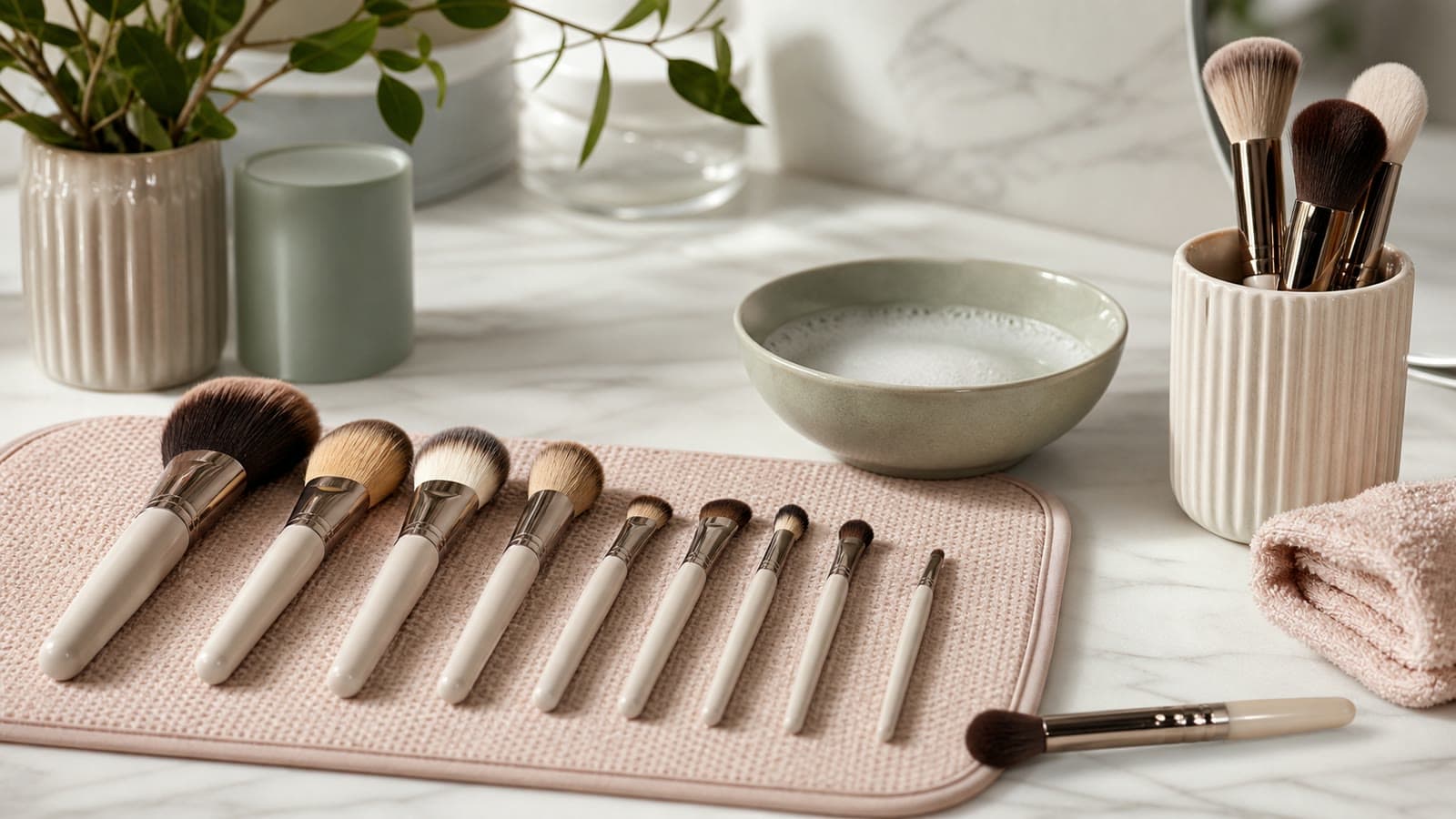
The American Academy of Dermatology's current makeup-brush cleaning guidance recommends washing brushes every 7 to 10 days. Its method uses lukewarm running water on the tips plus gentle or clarifying shampoo. Rinse until the water is clear, remove excess moisture with a clean paper towel, and dry brushes flat with the tips over a counter edge. The AAD warns against submerging the whole brush head or drying brushes upright because water can affect the glued connection.
Follow the brush maker's current directions when they are more specific about a material. Keep reusable tools to one user, and do not share brushes. Stop using a brush that irritates the skin or eye area, and seek qualified care for persistent irritation rather than relying on a product review.
Before buying, decide where brushes will dry flat with airflow and where clean tools will be stored away from dirty or damp items. A large set creates more cleaning and drying work, which is another reason to keep only useful shapes.
Authorized retailer and marketplace context
Sephora PH is a beauty retailer with its own current catalog, brand relationships, promotions, and return terms. Its source context can be easier to trace, but you still need to confirm the exact item, included pieces, materials, price, stock, and policy. Our Sephora PH beauty guide provides the retailer-specific checklist.
Shopee PH is a marketplace where source, seller identity, fulfillment, and support can vary by listing. Check whether a shop identifies as a brand or authorized retailer, then verify that claim through the brand's own current channel when it matters. Review seller history, exact-item photos, packaging, product codes where relevant, and responses to complaints.
No badge, packaging photo, buyer review, or low price can guarantee authenticity by itself. Avoid listings with unclear brand identity, copied-looking details, missing dimensions or materials, or pricing that is difficult to explain against traceable sellers. Read hygiene-related return restrictions before opening a set.
How we assessed this guide
Following the SulitScan editorial policy, we reviewed active Beauty and Skincare catalog entries with brush, tools, makeup, and beauty signals. Recommendations must match those assigned signals, exclude suspicious discount percentages, and are limited to three. We also checked AAD's current cleaning page and retailer context. We did not physically apply makeup, wash, shed-test, or authenticate the listed brushes.
Beginner brush and cleaning checklist
- List the face and eye products used in your normal routine.
- Give every brush shape one distinct job.
- Remove duplicate shapes and compare the useful set with individual prices.
- Check fibers, head dimensions, ferrule, handle, edge, and maker care instructions.
- Read recent exact-item reviews for shedding, loose parts, shape, and packaging.
- Verify retailer or marketplace seller context without relying on one authenticity signal.
- Read opened-item and hygiene return terms before payment.
- Plan to wash on the AAD schedule, rinse the tips, and dry the brushes flat.
Affiliate disclosure
SulitScan may earn a commission when you click a partner link and complete a purchase, at no extra cost to you. We do not physically test brushes, provide medical advice, or guarantee authenticity, softness, shedding performance, seller quality, or skin compatibility. Prices, stock, specifications, packaging, and return rules can change. Confirm the current listing and follow maker care directions. See our full Affiliate Disclosure.
Frequently asked questions
How many makeup brushes does a beginner need?
There is no universal count. Start with the smallest group that gives each product and step a distinct useful shape, often a few face and eye roles rather than a large set of duplicates.
Should a beginner buy a brush set or individual brushes?
Choose a set when most shapes have clear jobs and the useful pieces compare well at checkout. Buy individually when you need one missing role or a set repeats brushes you already own.
How often should makeup brushes be cleaned?
The American Academy of Dermatology recommends washing makeup brushes every 7 to 10 days. Follow its method and any more specific current care directions from the brush maker.
What should I check when reviews mention shedding?
Look for repeated recent reports tied to the exact item, whether fibers came out during washing or application, signs of ferrule looseness, and how the seller handled a defect. One review cannot predict every unit.
Does an official-looking marketplace shop guarantee authentic brushes?
No. Verify authorization through the brand's current channel when it matters, and evaluate seller identity, history, product details, packaging, pricing, and support together. No single signal guarantees authenticity.
Tags
Get weekly sulit finds in your inbox
Shopping tips, price-check reminders, and the best deals, free.
More shopping guides


Explore SulitScan