How to Check if Skincare or Makeup Is Legit in PH
About this guide
The SulitScan editorial team prepares buyer guides using desk-researched product information, primary guidance where available, and practical pre-purchase checks. We do not claim hands-on testing unless an article explicitly says a product was tested.
In this guide
- How we assessed this guide
- Understand FDA-notified, not FDA-approved
- Search the FDA portal precisely
- Verify the seller and supply trail
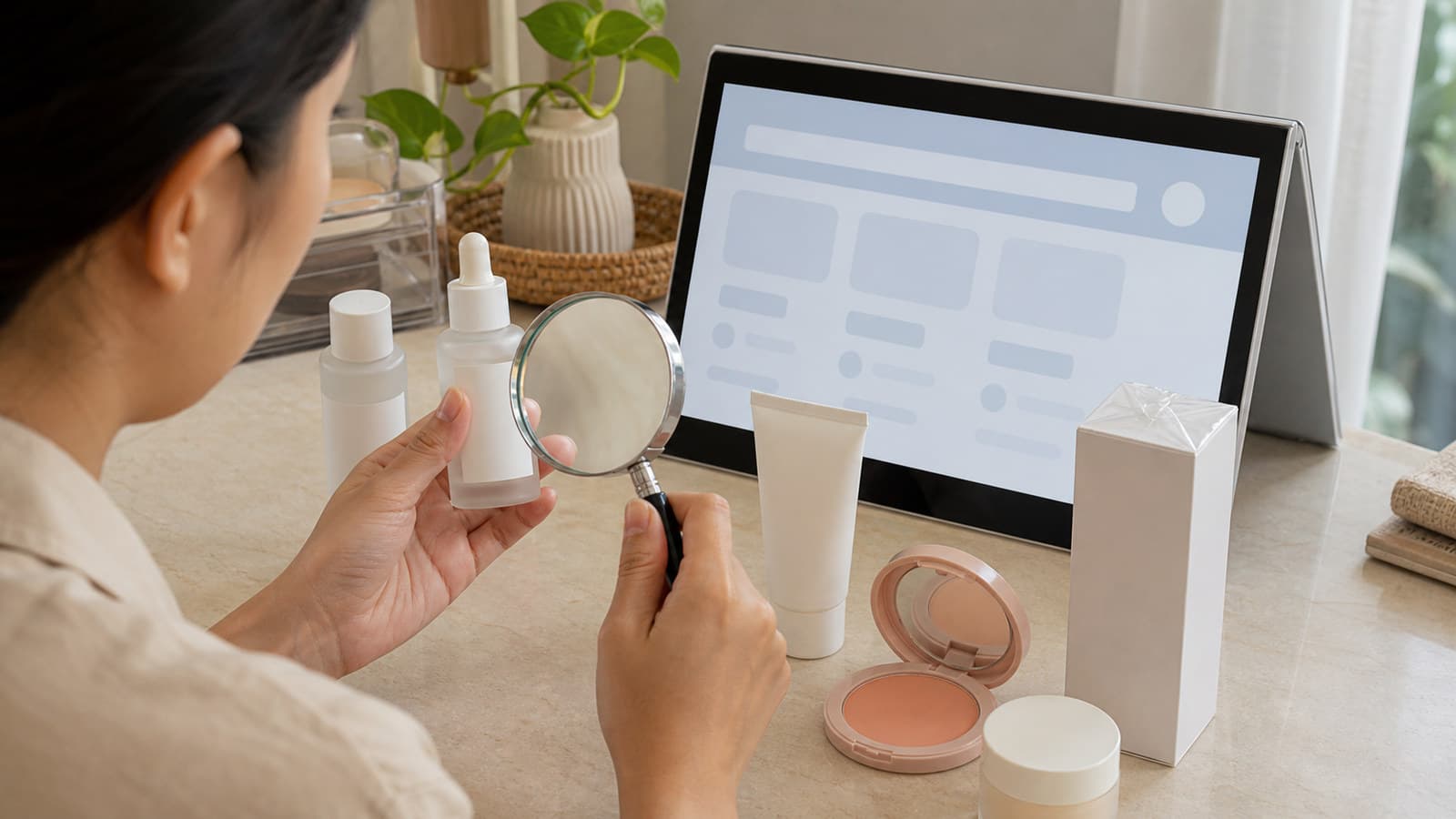
- Inspect the exact item and packaging
- Compare price and listing claims without jumping to conclusions
- Worked cosmetic-check decision
- What to do when there is no result or a mismatch
- Cosmetic legitimacy checklist
- Limitations and live-policy check
- Affiliate disclosure
Finding a cosmetic name in an official database is useful, but it does not authenticate the bottle, tube, palette, or seller in front of you. A counterfeit can copy a legitimate product name or number, while a genuine listing can be difficult to find because the search term, variant, or portal record differs.
The safest practical approach is layered: check the Philippine FDA notification, trace the responsible company and seller, inspect the exact packaging and batch details, compare the price and listing, and keep a receipt.
How we assessed this guide
We reviewed the Philippine FDA Cosmetic Product Notification search and FDA's advisory on using the Verification Portal.
We also used the FDA's FAQ on cosmetic notification under the ASEAN framework. It explains that accepting a notification is not product approval or confirmation that every requirement has been met; post-market surveillance still applies. An FDA advisory about an unauthorized cosmetic product illustrates why buyers should use current official records rather than a seller's claim alone.
This guide does not laboratory-test, authenticate, or medically assess a product. Portal entries, packaging, sellers, and advisories can change, so recheck the current record before buying or using a product.
Understand FDA-notified, not FDA-approved
For a cosmetic, use the phrase FDA-notified, not FDA-approved. A matching notification means the named product and responsible company appear in the portal under the displayed record and validity information. It is a regulatory signal, not a guarantee about the physical item, seller, batch, ingredient accuracy, or suitability for your skin.
The ASEAN notification framework places responsibility on the company and allows post-market monitoring. Acceptance does not mean the regulator individually endorsed the cosmetic or confirmed every claim. Avoid listings that turn “notified” into “approved,” “certified authentic,” or a medical promise.
A portal match is not proof of authenticity for the physical product. Counterfeit packaging can copy a real brand, notification number, barcode, or batch format. Continue with seller and item checks even after finding a record.
Search the FDA portal precisely
Start with the exact text on the listing or package, not a shortened social-media name. Search available fields and compare:
- Product or brand name
- Exact shade, scent, strength, set, or variant where recorded
- Cosmetic product notification or registration reference
- Responsible company, importer, distributor, or market authorization holder shown
- Notification and validity dates
- Product details in the record versus the label and listing
Try careful spelling variations, punctuation, spacing, and the responsible company if the first search fails. Do not substitute a record for another shade, formula, size, or similarly named product.
Open the result and save the official page or a dated screenshot. Then compare it with the physical label and seller's claim. A seller-provided screenshot can be outdated or edited, so repeat the search yourself through the official portal.
Verify the seller and supply trail
Identify who is selling the item and how that seller connects to the brand or responsible company. Useful checks include:
- Brand-owned Philippine store or a retailer named through the brand's official channel
- Marketplace shop legal or business identity and contact information
- Consistent invoice or receipt details
- Local importer or distributor matching the portal and label where applicable
- Recent exact-item reviews that show packaging, batch, seal, and seller handling
- A clear return route for a wrong, damaged, leaking, opened, or missing item
A marketplace badge, follower count, high rating, or “authentic” word is not conclusive by itself. Follow the Shopee seller legitimacy workflow and the online product review checklist to separate seller history from exact-item evidence.
For a traceable retailer context, the Sephora PH beauty guide explains how to check the exact product, price, stock, ingredients, and current return terms. A recognizable retailer still does not remove the need to choose the correct item and check suitability.
Inspect the exact item and packaging
Compare the received item with current official brand information where available. Check the product name, shade or variant, net content, ingredient list, directions, warnings, responsible company, batch or lot marking, seal, print quality, container, and included leaflet.
One packaging difference is not automatic proof of a counterfeit. Brands can redesign packaging, different markets can use different labels, and batches can vary. Ask the brand or responsible company through an official channel when a material discrepancy cannot be explained.
Treat a copied-looking barcode or QR code cautiously. A code can lead to a real page while being printed on a fake item. The code, batch, seller, packaging, receipt, and portal record should tell a consistent story.
Do not use smell, color, texture, or skin reaction as an authenticity test. These can vary and testing an unknown product on yourself can cause harm. If a seal is broken, the product looks contaminated, or use causes irritation, stop and seek appropriate professional advice.
Compare price and listing claims without jumping to conclusions
A very low price is a reason to investigate, not standalone proof. Compare the same size, variant, bundle, seller type, and current official price context. Samples, old packaging, near-expiry stock, parallel imports, and promotions can affect price, but the seller should be able to explain what is being sold.
Walk away when several risks appear together: unclear seller identity, copied brand text, a notification record for a different variant, missing batch or responsible-company details, altered seals, impossible medical claims, pressure to pay outside the platform, and a price far below traceable sources without explanation.
Save the listing before checkout. If it changes after purchase, your screenshot, order confirmation, receipt, and packaging photos establish the transaction you actually made.
Worked cosmetic-check decision
Suppose a marketplace listing offers a serum at a steep discount and displays an FDA number in one image.
- Search the exact serum name, variant, and responsible company in the FDA portal instead of trusting the listing image.
- Confirm that the portal result is current and matches the formula or variant, company, and label details. Do not treat a similarly named serum as the same record.
- Check the brand's official Philippine channel for the seller or distributor relationship. If none is shown, ask for a traceable explanation and receipt.
- Compare current packaging references with the listing's seal, batch placement, net content, ingredient panel, and responsible-company text.
- Compare the same size and variant with traceable sellers. Record whether the price difference has a credible explanation.
- If the portal matches but the seller and physical-item trail do not, do not call the item authentic. Choose a more traceable source or ask the responsible company.
- If the portal has no result, do not automatically label the product counterfeit. Recheck spelling, variant, and company, then contact the FDA or responsible company when the gap remains.
The decision is based on agreement across layers. No single badge, number, review, or packaging clue carries the whole conclusion.
What to do when there is no result or a mismatch
A no result is not automatically proof of a counterfeit. Search terms can be incomplete, portal entries can be corrected, and the exact variant may use a different record. Save what you searched, then verify with the FDA or responsible company through current official contact information.
When the portal result belongs to another product, company, or validity period, do not let the seller substitute it as evidence. Ask for the record corresponding to the exact item. If a delivered product is wrong, damaged, leaking, unsealed, or materially different from the listing, stop use, preserve the parcel and item, and use the platform's official remedy route.
For suspected unauthorized or unsafe cosmetics, check current FDA advisories and reporting channels. Avoid public accusations based on one uncertain clue; share organized evidence with the platform, responsible company, or authority able to assess it.
Cosmetic legitimacy checklist
- Record the exact product, size, shade, variant, and seller.
- Search the official FDA portal yourself.
- Match the responsible company and validity details.
- Confirm the seller or distributor relationship through an official channel where possible.
- Compare packaging, label, batch, seal, ingredients, and net content.
- Compare the same product and size with traceable price references.
- Read exact-item reviews and the return policy without treating reviews as authentication.
- Save the listing, seller page, receipt, order confirmation, and parcel evidence.
- Do not use an unknown cosmetic as a test of whether it is genuine.
- Escalate unresolved records or safety concerns through current official channels.
Limitations and live-policy check
This guide was reviewed on 2026-08-03. The FDA portal, notification validity, advisories, company relationships, packaging, formulas, seller status, and platform policies can change. A database check is neither a laboratory test nor a physical authentication service.
Recheck the exact product and current official record at the time of purchase. For allergies, irritation, pregnancy-related questions, medication interactions, or skin disease, ask a qualified health professional rather than relying on a listing or this guide.
Affiliate disclosure
SulitScan may earn a commission when you click an eligible partner link and complete a purchase, at no extra cost to you. We do not manufacture, sell, laboratory-test, notify, approve, or authenticate cosmetics, and we cannot guarantee a seller or item. Confirm the current FDA record, brand or responsible-company information, seller details, ingredients, and return terms before buying. See our full Affiliate Disclosure.
Frequently asked questions
Does an FDA cosmetic notification prove that my item is authentic?
No. It is a useful regulatory signal for the named product and responsible company, but a counterfeit can copy a real name or number. Check seller identity, packaging, batch and seal clues, price, and receipt too.
Should I call a cosmetic FDA-approved?
Use FDA-notified for a cosmetic record. Under the ASEAN framework, accepting a notification is not product approval or confirmation that every requirement has been met.
Does no FDA portal result mean skincare or makeup is fake?
Not automatically. Recheck the exact spelling, variant, responsible company, and validity details. If the gap remains, ask the FDA or responsible company through a current official channel and avoid using an uncertain item.
Tags
Get weekly sulit finds in your inbox
Shopping tips, price-check reminders, and the best deals, free.
More shopping guides
Explore SulitScan