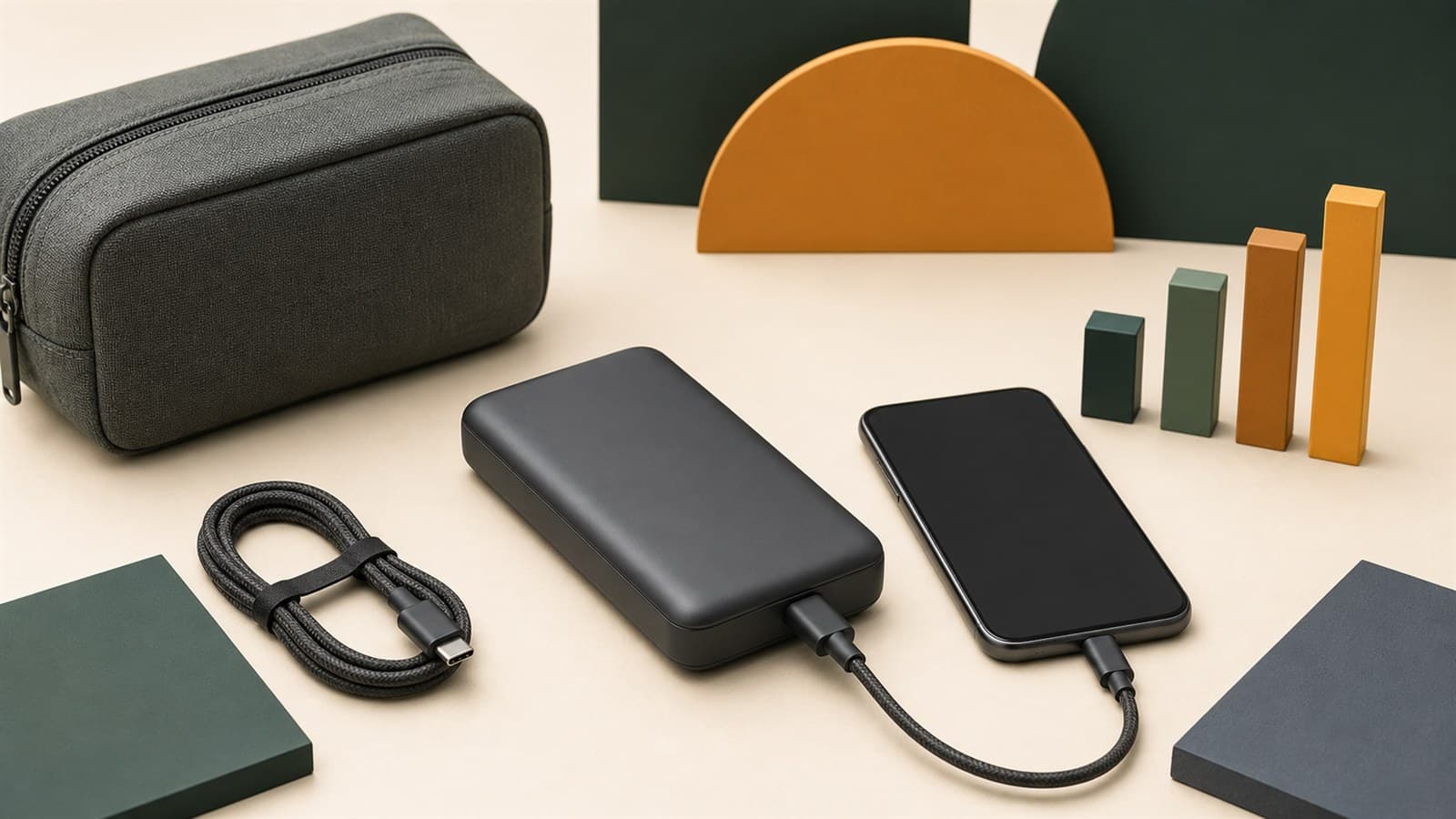
Power Bank Buying Guide Philippines: Capacity, Fast Charging, and Airline Rules
About this guide
The SulitScan editorial team prepares buyer guides using desk-researched product information, primary guidance where available, and practical pre-purchase checks. We do not claim hands-on testing unless an article explicitly says a product was tested.
In this guide
A power bank should match the device, cable, travel plan, and charging speed you actually need. Do not choose on a large mAh number alone. Check the labeled watt-hours, battery and output specifications, port directions, supported charging protocols, protection information, seller history, warranty, and current airline policy before buying.
Understand mAh and Wh without overpromising capacity
Milliamp-hours describe charge capacity at a stated voltage; watt-hours describe energy. The basic relationship is watt-hours = amp-hours × volts, and 1,000 mAh equals 1 Ah. For example, a labeled 10,000 mAh cell at 3.7 V is about 37 Wh, but use the maker's labeled Wh for travel checks rather than calculating from an unclear listing.
The advertised cell capacity is not the same as energy delivered to a phone at its charging voltage. Conversion, cables, heat, battery management, and the receiving device all use energy. Do not promise an exact number of full phone charges from mAh alone. Compare the power bank's labeled usable or rated output capacity when the maker provides it under stated test conditions.
Match ports, cables, and fast-charging protocols
List the devices and the input each one accepts: USB-C, USB-A, or another connector. Then check which power-bank ports are input, output, or both; the maximum output per port; and whether output changes when several devices are connected. A USB-C shape does not by itself guarantee USB Power Delivery or a particular wattage.
Fast charging works only when the power bank, port, cable, and device support a compatible protocol and power level. Check the device maker's current charging specifications and use a cable rated for the intended power. Marketing words such as fast, super, or quick are incomplete without named standards and output profiles.
Our phone accessories guide adds seller, certification-marking, heat-review, and return checks for charging products.
Set realistic size and charging expectations
Higher labeled capacity usually means more cells, weight, volume, or cost. Compare actual dimensions and mass with the pocket or bag you will use. Check whether the display shows a percentage or only rough indicator lights, whether pass-through charging is supported by the maker, and how long the power bank itself takes to recharge with a compatible adapter.
Look for clear protection and operating information, model identity, warranty terms, and instructions for storage and heat. Do not use or travel with a swollen, leaking, punctured, recalled, unusually hot, or otherwise damaged battery. Stop use and follow the maker's and local disposal guidance when damage appears.
Follow carry-on guidance and recheck the carrier
IATA's current lithium-battery travel guidance says spare batteries and power banks belong in hand baggage, not checked baggage, and should be protected against short circuits. It says batteries up to 100 Wh are generally allowed in carry-on baggage, while larger batteries can require airline approval or face further restrictions.
Before every trip, recheck your airline's current policy for power banks, watt-hour limits, quantity, terminal protection, use or charging in flight, and approval steps. Also check the operating carrier for each segment, because requirements may differ with airline policy and local rules. If a carry-on is gate-checked, remove the power bank and follow crew instructions.
The carry-on luggage guide helps separate product dimensions from carrier limits.
Compare final checkout value
Compare the same labeled Wh, port set, protocol support, included cable, dimensions, warranty route, and seller support. Add shipping and fees, then subtract only vouchers that apply to the selected variation. A lower item price is not better if specifications are unclear or the product cannot charge the intended device at the needed rate.
Use the checkout comparison tool to compare final totals and per-unit cost after fees and discounts. Confirm the live listing and checkout before paying because price, stock, vouchers, and included accessories can change.
Power-bank buying checklist
- List each device, connector, supported protocol, and required power.
- Check labeled Wh, cell capacity, and any stated rated output capacity.
- Verify port direction, single-port output, and shared-output behavior.
- Match a properly rated cable and compatible charging protocol.
- Review dimensions, weight, recharge time, protection information, and warranty.
- Avoid damaged, swollen, recalled, or unusually hot batteries.
- Recheck every operating carrier's current policy before travel.
- Compare the final checkout total for equivalent specifications.
Affiliate disclosure
SulitScan may earn a commission when you click a partner link and complete a purchase, at no extra cost to you. We do not physically capacity-test, safety-certify, fly with, or guarantee every power bank. Specifications, listings, airline rules, prices, stock, and warranty terms can change. Follow maker and carrier instructions and confirm current details before buying or traveling. See our full Affiliate Disclosure.
Frequently asked questions
Does 10,000 mAh mean a power bank will charge my phone a fixed number of times?
No. Delivered energy depends on cell voltage, conversion, cables, heat, battery management, and the receiving device. Check labeled Wh and any rated output capacity instead of promising a fixed count.
Does every USB-C power bank support fast charging?
No. The connector shape is not enough. The power bank, selected port, cable, and device must support a compatible protocol and power level.
Can a power bank go in checked baggage?
IATA's traveler guidance says power banks and spare batteries belong in hand baggage, not checked baggage. Recheck the operating airline's current policy before every trip.
Tags
Get weekly sulit finds in your inbox
Shopping tips, price-check reminders, and the best deals, free.
More shopping guides

Explore SulitScan